
Salt on Concrete: What Deicers Do to a Driveway
Updated
Get a free quote
A concrete contractor replies with a price. Nothing is booked until you say yes.
Rather talk? Call (815) 420-3970 or text us.
Short answer
Part of Concrete Sealing.
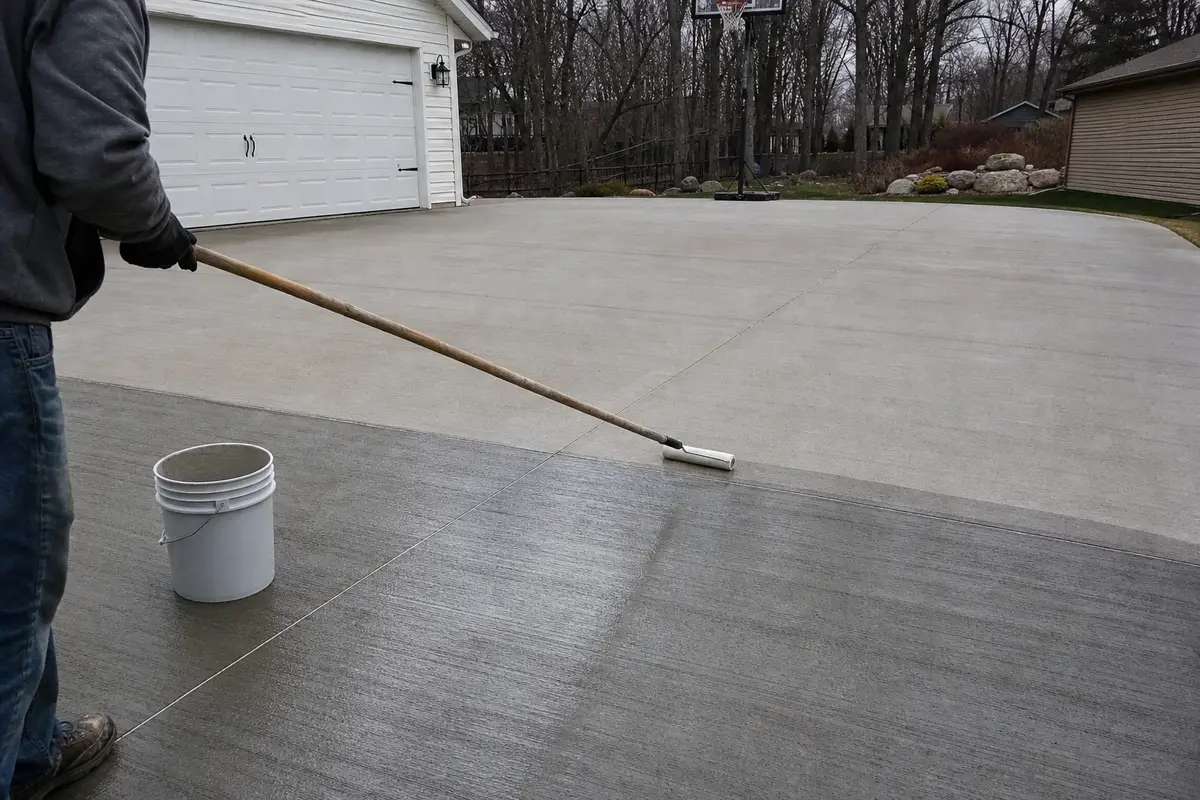
Rockford gets 37.1 inches of snow a year and 135.8 days at 32°F or colder, which is why people reach for the salt bag (NWS normals). The surface of a driveway or walk is the part that pays for it. This guide covers which deicers hurt concrete, how air entrainment protects it, and what to do the first winter. A sealer is one of the ways to protect a surface, and you can read about concrete sealing if you want to compare options.
Which deicers damage concrete
The Portland Cement Association is clear on one point: deicers that contain ammonium nitrate or ammonium sulfate are not recommended for use on concrete because they severely attack it. It adds that all deicers can aggravate scaling of concrete that is not properly air entrained (PCA EB001). So the real list has two parts. Some products are chemically bad for concrete in any condition, and every deicer is harder on concrete that was not mixed for freeze-thaw.
The Federal Highway Administration goes further for roads. It calls exposure to chemical deicers the most severe freeze-thaw exposure condition, and links the growing use of calcium chloride and magnesium chloride solutions to shadowing at pavement joints that progresses into disintegration of the concrete (FHWA). Joints and edges are where a driveway starts to fall apart first. A product that works fast at low temperatures is not free of cost to the slab.
Why air entrainment decides how much damage you see
The American Concrete Institute explains that tiny air bubbles are put into concrete on purpose to give freezing water room to expand, which makes the concrete more resistant to freezing and thawing and cuts scaling from ice-removal chemicals. Air-entrained concrete can survive several hundred percent more freeze-thaw cycles than concrete without it (ACI FAQ on air entrainment). Scaling is the flaking of the top layer, and a slab without enough air is the one that shows it.
| Standard | Air content | Where it applies |
|---|---|---|
| 2024 IRC R402.2 | 5 to 7 percent | Exposed flatwork such as garage floors and steps (the code table) |
| PCA EB001, severe exposure | six percent for 3/4 inch aggregate | Concrete with freeze-thaw and deicer exposure |
| FHWA, paving concrete | six percent plus or minus 1.5 percent | Paving and bridge deck concrete exposed to deicers |
The 2024 International Residential Code calls for air-entrained concrete with 5 to 7 percent total air in these cases (IRC R402.2). Loves Park's and Boone County's adopted code tables list the weathering class as severe (Loves Park, Boone County). We could not confirm the weathering class Rockford uses, so ask your crew what air content the plant is batching for your pour.
The first winter on a new slab
The PCA durability checklist asks for at least 7 days of moist curing at 50°F or above, followed by a drying period of at least 30 days before the slab sees freeze-thaw and deicers when saturated (PCA EB001). The Illinois Ready Mixed Concrete Association's guide for residential flatwork goes further: no salt or deicers for the first winter, and sand for traction instead (IRMCA). That is a trade-association recommendation, not a code rule. It is also cheap insurance, because a driveway poured in October gets its first winter before it has dried for 30 days. The related guide on how long before you can use new concrete lays out walking and driving times.
What to use instead of rock salt
- Shovel early and often. Packed snow is what makes ice, so removing it before it bonds is the safest method.
- Use sand for grip on new concrete. It does not melt ice, but it does not harm the surface.
- If you do use a deicer on older, air-entrained concrete, check the label and avoid anything with ammonium nitrate or ammonium sulfate.
- Sweep up spent salt in spring so it does not sit on the slab or wash toward the lawn.
If the surface is already scaling
A scaled surface is flaking, rough and pitted. Light scaling can be fixed with a resurfacing layer, and a national cost guide puts resurfacing at $3 to $9 per sq ft. Deeper damage may need a section replaced. The concrete repair page covers the choices, and the cost page has the national price ranges. A sealer is cheaper and goes on after the surface is sound: a national guide puts sealing with labor at $1.35 to $2.50 per sq ft (Angi).
If you are planning decorative work, a stamped concrete surface needs the same care in winter, and the sealer on it is part of the maintenance. Ask the installer which deicer products the sealer maker allows.
What the structural code asks for
The structural code, ACI 318-19, sets exposure classes for freeze-thaw. The class for concrete with frequent water plus deicing chemicals (F3) asks for at least 5,000 psi and a water-to-cement ratio of no more than 0.40, both air entrained (ACI Foundation durability guidance). House flatwork is normally governed by the residential code, which asks for 3,500 psi for exposed flatwork in severe weathering, so the F3 figures show how seriously engineers treat deicer exposure rather than a number your driveway has to hit. If your driveway sees a lot of salt, ask the crew what strength and air content they are ordering.
Where the salt on your slab comes from
Most of it is not yours. Cars carry road salt up the driveway on tires and bumpers, and the melt pools where the slab dips. The apron at the street takes the heaviest dose. Rinsing the surface with water once the ice is gone in spring helps remove what stays behind.
Reading a deicer label
Bags rarely say how they treat concrete, but the ingredients are listed. Check for ammonium nitrate and ammonium sulfate, which the PCA says to avoid. Chloride products are common, and the FHWA findings above on calcium and magnesium chloride apply to joints and edges. If a label makes a claim that it is safe for concrete, treat that as marketing and ask the installer or the sealer maker what they allow on your slab.
Parking lots take the most salt of all; the commercial concrete page covers the higher-strength mixes ACI sets for deicer exposure.
Sources: Portland Cement Association, Design and Control of Concrete Mixtures (EB001); FHWA, durability of concrete pavements (HIF-17-008); American Concrete Institute, FAQ on air entrainment; 2024 International Residential Code, R402.2 (concrete); ACI Foundation, durability guidance (ACI 318-19 exposure classes); City of Loves Park, Ord. 4689-25 (IRC amendments); Boone County, amended 2021 IRC; Illinois Ready Mixed Concrete Association, residential exterior flatwork guide; National Weather Service, Rockford 1991-2020 normals; Angi, concrete resurfacing cost; Angi, concrete sealing cost
Want a price for your own house?
Call, text, or send the form. You get a price back before any work is scheduled.
Quick answers
Is rock salt bad for concrete?
All deicers can aggravate scaling on concrete that is not properly air entrained, according to the PCA. New concrete is the most exposed, so trade groups say to skip salt the first winter.
Which deicers should never go on concrete?
The PCA says deicers that contain ammonium nitrate or ammonium sulfate severely attack concrete and are not recommended. Check the product label before buying.
Can I use salt on a new concrete driveway in the first winter?
The Illinois Ready Mixed Concrete Association says to keep salt and deicers off for at least the first winter and use sand instead. That is a trade guide, not code.
What is air-entrained concrete?
Air-entrained concrete has tiny bubbles added on purpose so freezing water has room to expand. The 2024 IRC calls for 5 to 7 percent total air in exposed flatwork.
How long should concrete cure before salt touches it?
The PCA asks for at least 7 days of moist curing at 50°F or above, then at least 30 days of drying before freeze-thaw and deicer exposure. Ask your contractor how a fall pour meets that.
Does sealing concrete protect it from salt?
A sealer is one layer of protection, and national guides put sealing with labor at $1.35 to $2.50 per sq ft. See the cost page. Ask the sealer maker which deicers its product allows.
Want a price on the job?
Send the job, the town and a rough size. A concrete contractor replies with a price before any work starts.
Prices and the full service list are on the homepage for a concrete contractor in Rockford.